


So, you’ve finally taken the plunge and bought your first Yixing teapot. You’re ready to brew that perfect aged Pu'erh or roasted Oolong. But then, a dark thought crosses your mind: "Wait... is this teapot actually real?"
The Yixing market is notoriously tricky. With the rise of mass-produced, slip-cast fakes and toxic "Chemical Clay" (化工泥), it’s easy for beginners to get scammed. But don't panic! You don't need a PhD in Chinese ceramics to spot a fake.
Here are 5 practical, at-home methods to help you identify whether your Yixing Zisha teapot is the real deal.
Method 1: The Visual & Tactile Inspection (Beware of "Chemical Clay")
Authentic Zisha clay is a natural ore. It should look and feel natural. Fake teapots often use ordinary mud mixed with chemical dyes and glass water to mimic Yixing clay.
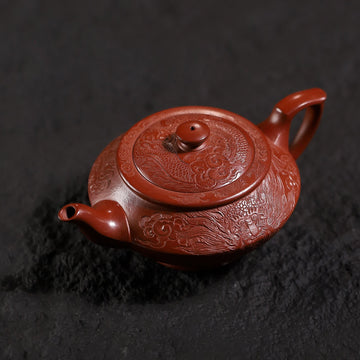
- The Look: Real Zisha has a muted, warm, and natural tone (deep purple, warm red, or natural beige). If your teapot is a blinding, neon red or an unnaturally bright green, be highly suspicious.
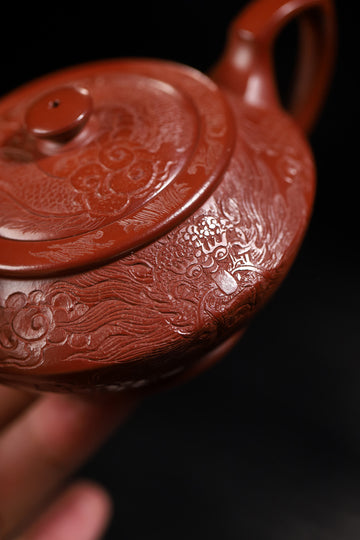
- The Feel: Authentic Yixing has a subtle, sandy texture (like very fine sandpaper). It feels rich and porous. Fake clay often feels plasticky, overly glossy, or unnaturally smooth.

Method 2: The Boiling Water Test (Porosity & Smell)
This is the ultimate test for both authenticity and safety. Pour boiling water over the outside of your empty teapot.
- Absorption: Real Zisha is highly porous. It will absorb the hot water relatively quickly, leaving a warm, matte finish. Fake clay is non-porous; the water will just bead up and roll off like it’s hitting glass or plastic.
- The Smell: Take a deep breath inside the hot, empty pot. Real Zisha smells like clean, baked earth, or has no smell at all. If you smell plastic, acid, or a sharp chemical odor, stop using it immediately. It’s a chemical pot and could be leaching toxins into your tea.

Method 3: The "Water Seal" Test (Functionality Check)
Western teaheads love a pot with good engineering. Fill your teapot with water, put the lid on, and start pouring. While pouring, press your finger tightly over the little air hole on top of the lid.
- If the water stops instantly: Congratulations! Your teapot has an excellent air seal, which is a hallmark of good Yixing craftsmanship.
- If the water keeps leaking out: The lid doesn't fit well. While this doesn't 100% mean it's fake (some older or cheaper authentic pots have loose lids), it's a sign of poor craftsmanship often found in cheap knock-offs.

Method 4: The Sound Test (Listen Closely)
Hold the teapot by the handle and gently tap the body with the lid or a plastic pen.
- Real Zisha: Produces a dull, resonant, sandy "thud" or a solid pottery sound.
- Fake Zisha: Often sounds very high-pitched, sharp, and clinky—almost like tapping a wine glass or porcelain. This means the clay has been mixed with glass/porcelain to make it look shiny, or it was fired incorrectly.
Method 5: The Internal Inspection (Embrace the Imperfections)
Many beginners think a perfect teapot must be smooth inside and out. This is a huge myth. Mass-produced fake pots are made by pouring liquid clay into a mold (slip-casting). These pots will be perfectly smooth on the inside, almost like a mirror. Authentic Yixing teapots are built by hand (either half-handmade or fully handmade). If you look inside a real pot, you will often see faint lines radiating from the center of the bottom—these are spatula marks left by the craftsman (called Tui Qiang Gua Di / 推墙刮底). In Yixing, slight internal imperfections are proof of human hands.

💡 The Golden Rule: The Price Tag
Let’s be brutally honest: You cannot buy an authentic Yixing teapot for $30 on Amazon or AliExpress. Real Zisha ore is scarce, and the hand-building process takes years to master. If a deal seems too good to be true, it is. Expect to pay at least $80-$150 for a decent, entry-level half-handmade authentic Yixing pot.
Have you tested your teapot using these methods yet? Let me know your results in the comments below! If you're unsure, drop a picture and let's figure it out together. 👇🍵


